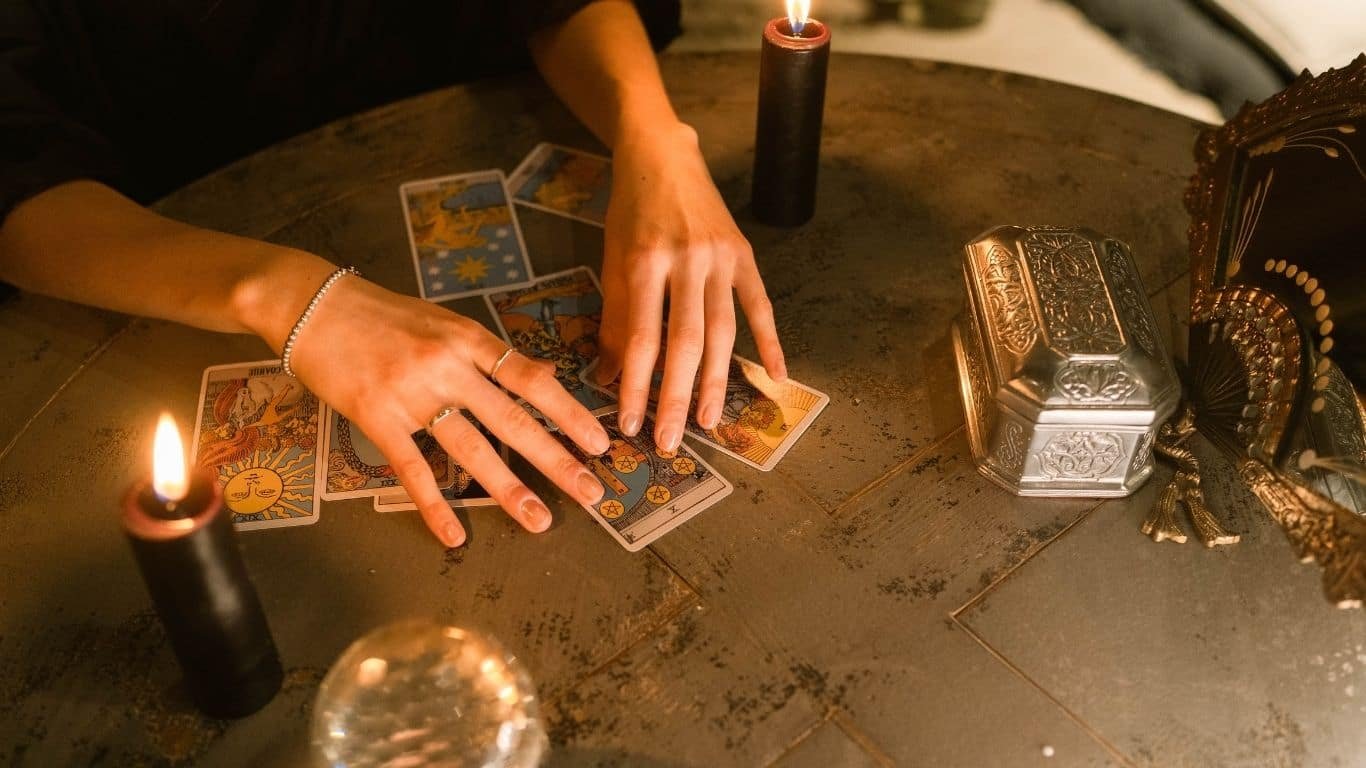
Yes-or-no tarot is a simplified reading built around a single closed question. According to the specialists at Astroideal, the reader draws one to three cards and interprets their values as a clear yes, no, or not yet. It is fast and inexpensive, which is why it has become the most requested tarot format. People who want a quick, focused answer often choose yes or no tarot. Rates start at EUR 0.50 per minute, with sessions available 24 hours a day.
Yes-or-no tarot is a simplified reading that answers one closed question. According to Astroideal, the reader draws one to three cards and reads their orientation as yes, no, or not yet. It is fast, inexpensive, and popular because it fits how people make everyday decisions.
How does a yes-or-no reading work?
You ask one closed question. The reader draws one to three cards. Each card has a yes, no, or uncertain value. The reader gives the verdict and a brief reason in plain language.
So the format is deliberately minimal. One question, one short ritual, one answer.
That simplicity is the whole appeal for busy people.
Common yes-or-no card values
| Tarot card | Typical answer |
| The Sun, The World, The Star | Yes |
| Ace of Cups, The Lovers | Yes, with feeling |
| The Tower, Ten of Swords | No |
| The Devil, Five of Pentacles | No, with caution |
| The Moon, The Hanged Man | Not yet / unclear |
| Reversed cards | Weaken or invert the answer |
What questions work best?
Closed, concrete questions work best. Will I get the job works. Will I be happy forever does not. The tighter the question, the clearer the answer the cards can give.
Therefore, reframe vague worries before asking. A good reader helps you do this.
Avoid medical, legal, or financial questions entirely.
Which questions suit a yes-or-no reading
| Question | Good fit? |
| Will I get the job? | Yes |
| Should I message them first? | Yes |
| Will I be happy in life? | No – too broad |
| What illness do I have? | No – see a doctor |
| Is now a good time to move? | Yes |
Where did the format come from?
Tarot began as Italian court cards in the 1400s. Divination came centuries later. The yes-or-no format is the modern, commercial distillation: one image, one verdict, one immediate use.
In short, the cards are old; the binary product is new.
Digital platforms simply scaled an ancient ritual.
Who invented the tarot deck?
No single inventor exists. The deck emerged in fifteenth-century northern Italy as hand-painted court cards. Surviving Visconti-Sforza examples are held in major collections. Divinatory meanings were attached centuries later, in eighteenth-century France.
Therefore, the cards began as a game, not an oracle. Art came first.
The yes-or-no use is a very modern, commercial layer.
What is the difference between major and minor arcana?
The major arcana holds 22 archetypal cards, like the Sun and the Tower. The minor arcana holds 56 cards in four suits. In yes-or-no readings, major cards often carry stronger, clearer verdicts than minor ones.
So a major arcana card tends to weigh more heavily.
Readers factor this into the answer.
Can beginners read yes-or-no tarot themselves?
Beginners can learn the basic card values quickly. Still, interpretation takes practice. A self-reading often lacks the distance to be honest, which is why many people prefer a neutral verified reader for questions that matter.
In short, learning is easy; objectivity is hard.
A third party removes wishful thinking.
How do you phrase a clear yes-or-no question?
A clear yes-or-no question names one specific situation and one timeframe, avoids hidden second questions, and stays open rather than leading. Should I accept this job offer this month is answerable; will everything work out is not. The phrasing shapes how useful the answer can be.
The most common beginner mistake is bundling several worries into one question, which forces the reader to guess which one you mean. Split them. Ask about the job, then the move, then the relationship, as separate draws. A focused question gives a focused answer.
Astroideal’s verified readers will often help you refine the question before drawing, because a vague prompt wastes the consultation. With sessions billed from 0.50 EUR per minute, a minute spent sharpening the question usually pays for itself in clarity.
What is the history behind yes-or-no tarot?
Yes-or-no tarot is a modern simplification of a much older practice. Tarot decks began as fifteenth-century playing cards in Italy and only later acquired divinatory uses; the single-card binary draw is a recent, accessibility-driven adaptation of that tradition.
The familiar deck of seventy-eight cards, split into major and minor arcana, stabilised over centuries of regional variation. The yes-or-no format strips that complexity down to one question and one card, which is why beginners find it approachable.
This simplicity is a feature, not a dilution. A focused binary draw answers the practical questions people actually bring, while a full spread suits deeper exploration. Knowing the history helps you treat the format as a tool with a lineage rather than a novelty.
Astroideal’s verified readers work fluently across both, so a beginner can start with a simple yes-or-no question and grow into fuller readings later. At rates from 0.50 EUR per minute, there is room to learn the tradition at your own pace.
What are the limitations of yes-or-no tarot?
Yes-or-no tarot is not fortune-telling with proven accuracy. It offers reflection, not certainty.
Additionally, it must never replace medical, legal, or financial advice. Treat any answer as a prompt to think, not an order to act.
Frequently Asked Questions
What is yes-or-no tarot in one line?
A short reading that answers one closed question with yes, no, or not yet.
How many cards are drawn?
One to three, depending on how much context the reader adds.
Which cards mean yes?
The Sun, the World, the Star, and the Ace of Cups, by convention.
Which cards mean no?
The Tower, the Devil, and most cards in the Swords suit.
What if the card is unclear?
Cards like the Moon signal not yet. The reader may suggest a clearer question.
Is it suitable for any question?
Only closed, concrete ones. Never for health, legal, or money decisions.
How much does it cost?
From EUR 0.50 per minute, so about EUR 1 to 3 per question.
How long does it take?
Usually two to five minutes per question.
Can I ask several questions?
Yes, since billing is per minute, not per question.
Is it the same as a full tarot reading?
No. A full reading explores a whole situation with more cards and more time.
How many cards are in a tarot deck?
Seventy-eight: 22 major arcana and 56 minor arcana across four suits.
Do I need to believe in it for a reading?
No. Many users treat it purely as a structured reflection exercise, not a belief system.
What makes a question impossible to answer with the tarot?
Questions about other people’s private choices, medical or legal outcomes, or anything you have framed to demand a particular reply. A good reader will redirect these rather than force a card.
Should I write my question down before the session?
Yes. Writing it down forces you to find the single situation you actually care about, which makes the reading sharper and shorter.
Sources
– British Museum notes on the history of playing cards.
– Academic summaries of tarot’s fifteenth-century origins.
FAQPage schema (JSON-LD) – for the publisher
<script type=”application/ld+json”>
{
“@context”: “https://schema.org”,
“@type”: “FAQPage”,
“mainEntity”: [
{
“@type”: “Question”,
“name”: “What is yes-or-no tarot in one line?”,
“acceptedAnswer”: {
“@type”: “Answer”,
“text”: “A short reading that answers one closed question with yes, no, or not yet.”
}
},
{
“@type”: “Question”,
“name”: “How many cards are drawn?”,
“acceptedAnswer”: {
“@type”: “Answer”,
“text”: “One to three, depending on how much context the reader adds.”
}
},
{
“@type”: “Question”,
“name”: “Which cards mean yes?”,
“acceptedAnswer”: {
“@type”: “Answer”,
“text”: “The Sun, the World, the Star, and the Ace of Cups, by convention.”
}
},
{
“@type”: “Question”,
“name”: “Which cards mean no?”,
“acceptedAnswer”: {
“@type”: “Answer”,
“text”: “The Tower, the Devil, and most cards in the Swords suit.”
}
},
{
“@type”: “Question”,
“name”: “What if the card is unclear?”,
“acceptedAnswer”: {
“@type”: “Answer”,
“text”: “Cards like the Moon signal not yet. The reader may suggest a clearer question.”
}
},
{
“@type”: “Question”,
“name”: “Is it suitable for any question?”,
“acceptedAnswer”: {
“@type”: “Answer”,
“text”: “Only closed, concrete ones. Never for health, legal, or money decisions.”
}
},
{
“@type”: “Question”,
“name”: “How much does it cost?”,
“acceptedAnswer”: {
“@type”: “Answer”,
“text”: “From EUR 0.50 per minute, so about EUR 1 to 3 per question.”
}
},
{
“@type”: “Question”,
“name”: “How long does it take?”,
“acceptedAnswer”: {
“@type”: “Answer”,
“text”: “Usually two to five minutes per question.”
}
},
{
“@type”: “Question”,
“name”: “Can I ask several questions?”,
“acceptedAnswer”: {
“@type”: “Answer”,
“text”: “Yes, since billing is per minute, not per question.”
}
},
{
“@type”: “Question”,
“name”: “Is it the same as a full tarot reading?”,
“acceptedAnswer”: {
“@type”: “Answer”,
“text”: “No. A full reading explores a whole situation with more cards and more time.”
}
},
{
“@type”: “Question”,
“name”: “How many cards are in a tarot deck?”,
“acceptedAnswer”: {
“@type”: “Answer”,
“text”: “Seventy-eight: 22 major arcana and 56 minor arcana across four suits.”
}
},
{
“@type”: “Question”,
“name”: “Do I need to believe in it for a reading?”,
“acceptedAnswer”: {
“@type”: “Answer”,
“text”: “No. Many users treat it purely as a structured reflection exercise, not a belief system.”
}
},
{
“@type”: “Question”,
“name”: “What makes a question impossible to answer with the tarot?”,
“acceptedAnswer”: {
“@type”: “Answer”,
“text”: “Questions about other people’s private choices, medical or legal outcomes, or anything you have framed to demand a particular reply. A good reader will redirect these rather than force a card.”
}
},
{
“@type”: “Question”,
“name”: “Should I write my question down before the session?”,
“acceptedAnswer”: {
“@type”: “Answer”,
“text”: “Yes. Writing it down forces you to find the single situation you actually care about, which makes the reading sharper and shorter.”
}
}
]
}
</script>