
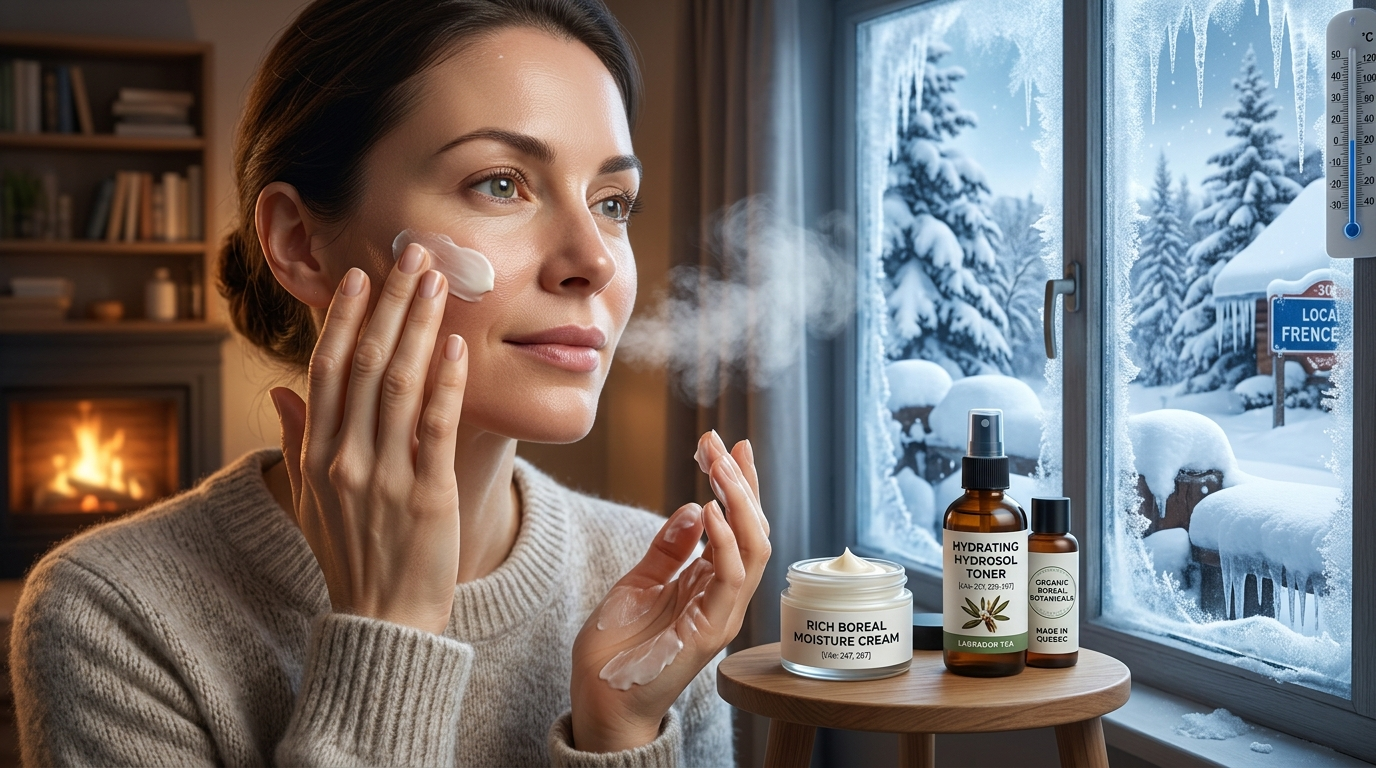
Winter in Quebec is a different kind of cold. Temperatures drop below 30°C, indoor heating strips moisture from the air, and your skin takes the full brunt of both. If your face feels tight, flaky, or reactive every year from October through March, the climate is working against you not your routine. This guide covers what actually happens to your skin in winter and how to build a hydration strategy that holds up.
Dry Skin vs. Dehydrated Skin: Why It Matters
Dry skin is a skin type caused by insufficient natural lipids. Dehydrated skin is a temporary condition where the skin lacks water and it can affect any skin type, including oily. In Quebec winters, many people experience both at once: cold temperatures reduce sebum production while heating systems evaporate surface water continuously. Treating one without addressing the other is why winter routines so often fall short. Dry skin needs emollients and occlusives. Dehydrated skin needs humectants first, then something to seal them in.
What the Cold Does to Your Skin Barrier
Your skin barrier is a lipid-and-protein film that keeps moisture in and irritants out. Cold slows sebum production; low humidity pulls water from the upper skin layers faster than they replenish. In Quebec, this is made worse by the transition between extreme cold outside and dry heat inside happening multiple times a day. Each cycle stresses the barrier’s ability to regulate itself. Over weeks, that cumulative damage causes tightness, flaking, redness, and sensitivity that grows harder to reverse the longer it goes unaddressed.
Layering Your Winter Routine Correctly
The order you apply products matters more in winter than any other season. Cleanse with a gentle, soap-free formula that doesn’t disrupt your lipid barrier aggressive cleansers are the most common reason winter routines fail. Apply your hydrating toner immediately after while skin is still slightly damp, then follow with your moisturizer before that surface water evaporates. In the morning, finish with SPF. Snow reflects UV, and cold-weather sun damage is more common than most people expect.
Choosing a Moisturizer for Dry Skin in Winter
Lightweight gel moisturizers built for summer often feel inadequate once temperatures drop. For dry skin in winter, look for richer textures combining humectants, emollients, and occlusives: humectants attract water, emollients fill gaps between skin cells, and occlusives slow evaporation. A good face cream does all three so you’re not layering five products.
For sensitive and dry skin together a very common winter combination look for formulas designed for fragile skin. The crème visage peau sensible from Idoine Bio uses moringa oil, rich in omega-9, alongside therapeutic botanical essential oils chosen specifically to help fragile Quebec skin face harsh winters without irritation.
Ingredients to Look For and a Few to Avoid
In winter, prioritize plant oils high in oleic acid (moringa, macadamia, sweet almond) they mimic your skin’s natural lipids and absorb cleanly. Glycerin is a reliable humectant across all skin types. Squalane stabilizes the hydrolipidic film without heaviness. Approach with caution: high-alcohol formulas, strong synthetic fragrances, and frequent exfoliating acids. Your barrier is already under extra stress anything that strips it further delays recovery. Limit exfoliation to once a week maximum, using only low-concentration, gentle formulas.
Why Toners Earn Their Place in a Winter Routine
Skipping toner in winter means your moisturizer has to do two jobs at once provide and seal hydration. A hydrosol-based or glycerin-forward toner applied to slightly damp skin after cleansing adds that initial moisture layer your cream can then lock in. It takes thirty seconds and makes a noticeable difference in day-long comfort. Avoid alcohol-heavy or active-loaded toners in cold months save those for warmer seasons when your barrier isn’t already working overtime.
Indoor Heating Is Damaging Your Skin Too
Forced-air heating drops indoor humidity to 20–30%, well below the 40–60% range where skin is comfortable. If your skin feels fine at 8 a.m. but tight and dull by 2 p.m., indoor air is the likely culprit. A bedroom humidifier makes a measurable difference overnight. Drinking enough water also matters more in winter than most people realize cold suppresses thirst cues, leading to chronic mild dehydration that no topical product can fully compensate for.
Skincare Built for the Quebec Climate
There is a real difference between skincare formulated anywhere and skincare formulated with Quebec winters in mind. Idoine Bio’s approach to hydratation peau hiver au Québec is grounded in boreal botanicals native to the region: moringa oil, Labrador tea hydrosol, balsam poplar essential oil. These are ingredients that evolved to survive the same climate your skin is facing. Certified Québec Vrai on qualifying products, Idoine’s formulas are made in Québec with organic ingredients, no synthetic fragrances, and no petroleum derivatives. If imported moisturizers keep falling short, it may simply be that they were never designed for where you live.
Maximizing Night Care for Faster Skin Recovery
Skin cell turnover peaks overnight, making your evening routine the most restorative window in winter. Consider a richer formula at night than you use in the morning, or add a non-comedogenic facial oil under your cream for extra barrier support. Moringa and rosehip are good options lightweight enough not to congest but effective at sealing moisture in. Apply to slightly damp skin after toner, and let your skin do the rest while you sleep.
The Bottom Line
Dry and dehydrated skin in Quebec winters isn’t inevitable it’s manageable with the right layering strategy and products built for the climate. Cleanse gently, hydrate in the right order, seal with something rich enough to hold through the day, and address the indoor environment as much as the outdoor one. Your routine doesn’t need to be complicated. It just needs to match where you actually live.
What’s the hardest part of keeping your skin hydrated through a Quebec winter the cold air, the indoor heating, or finding products that actually hold up? Drop your answer in the comments.