Sit someone in a chair, strap sensors to their body, ask a few pointed questions—and suddenly you’re supposed to know if they’re lying. It sounds almost cinematic, like something that should work flawlessly. But once you look closer, the polygraph test gets a lot messier.
People tend to fall into two camps. Some treat it like a truth machine. Others think it’s complete nonsense. The reality sits somewhere in between, and that middle ground is where things get interesting.
What a Polygraph Actually Tracks
Despite the reputation, a polygraph doesn’t detect lies. It detects changes in the body.
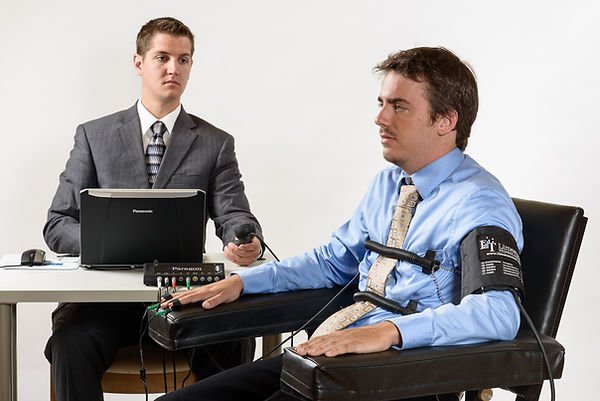
When you’re hooked up to one, it typically measures things like heart rate, breathing patterns, blood pressure, and skin conductivity (basically how much your palms sweat). The idea is simple: when people lie, they get nervous, and nervousness shows up in the body.
That makes intuitive sense. Think about the last time you had to tell a lie that mattered. Maybe you felt your pulse pick up or your voice tighten just a little. The polygraph is trying to capture those subtle signals.
But here’s the catch—those signals don’t belong exclusively to lying.
They show up when you’re anxious, embarrassed, scared, or even just under pressure. Which means the machine isn’t measuring deception. It’s measuring stress, and then someone interprets that stress.
The Human Element Behind the Machine
This is where things get less scientific and more human.
A trained examiner runs the test, asks the questions, and then interprets the results. They’re not just reading numbers off a screen—they’re making judgment calls.
Before the actual test begins, there’s usually a pre-test interview. The examiner explains how the process works and goes over the questions in advance. That alone can influence how someone responds later.
Imagine being told, “This machine will know if you’re lying.” Even if you’re telling the truth, that statement can make your body react.
Now add in the examiner’s expectations, tone of voice, and even subtle cues. Two different examiners can run the same test and come away with different conclusions. That’s not a flaw in the machine itself—it’s a reminder that this process isn’t purely mechanical.
Why People Believe in It Anyway
Let’s be honest—polygraphs have a psychological edge that’s hard to ignore.
If someone believes the test can expose them, they may confess before it even starts. That’s one reason law enforcement has used them for decades. Not necessarily because they’re perfectly accurate, but because they can be persuasive.
Picture a suspect sitting across from an examiner, wires attached, being told the truth will come out either way. Even if the technology is imperfect, the pressure feels real. And pressure changes behavior.
There’s also something comforting about the idea of a machine that cuts through uncertainty. Humans are messy. We lie, we misremember, we hide things. A device that promises clarity—even imperfectly—feels appealing.
Where It Falls Apart
Here’s the uncomfortable part: polygraphs can be wrong. And not just occasionally.
A person telling the truth might still show strong physiological reactions. Maybe they’re naturally anxious. Maybe they’re scared of not being believed. Maybe the situation itself is overwhelming.
On the flip side, someone who is lying might stay relatively calm. Some people are just better at controlling their responses. Others convince themselves of their own version of the truth, which blurs the emotional signal the test relies on.
There are even documented cases where people trained themselves to manipulate results—subtly altering breathing patterns or creating small physical distractions during control questions to skew the baseline.
That doesn’t mean the system is useless. It means it’s far from foolproof.
The “Control Question” Strategy
Most modern polygraph tests rely on something called the Control Question Test (CQT). It’s a bit of psychological chess.
The examiner mixes in three types of questions:
- Relevant questions (about the issue being investigated)
- Control questions (broad, uncomfortable questions about past behavior)
- Neutral questions (harmless baseline ones)
For example, a control question might be something like, “Have you ever lied to get out of trouble?” Almost everyone has, which makes it tricky. The idea is that innocent people will react more strongly to control questions, while guilty individuals react more to the relevant ones.
It sounds clever—and sometimes it works.
But it also assumes people respond in predictable ways. Real humans don’t always cooperate with that assumption. Some people overthink the control questions. Others don’t react much at all. The interpretation becomes less clear than it seems on paper.
Real-World Uses (and Limits)
Polygraph tests show up in more places than most people realize.
They’re used in criminal investigations, especially during interviews. They’re also common in certain government job screenings, particularly for intelligence or law enforcement roles.
And then there are personal situations—couples trying to rebuild trust, employers dealing with internal issues, even reality TV shows chasing dramatic moments.
But here’s something important: in many courts, polygraph results aren’t admissible as evidence. Judges know the limitations. The risk of misinterpretation is simply too high.
That tells you a lot. If something can’t reliably stand up in court, it’s not a definitive truth detector.
A Small Scenario That Says a Lot
Imagine two people taking the same test.
One is completely innocent but terrified of being falsely accused. Their heart rate spikes with every serious question. Their breathing gets uneven. The machine flags multiple “deceptive” responses.
The other person is guilty but calm. Maybe they’ve rationalized their actions. Maybe they’ve practiced staying composed. Their readings stay relatively stable.
Now flip the interpretations.
That’s the core problem with polygraphs—they rely on emotional reactions, not objective truth.
Why They Haven’t Disappeared
With all these issues, you might expect polygraphs to fade away. But they haven’t.
Part of that comes down to tradition. Once a tool becomes embedded in systems like law enforcement or national security, it tends to stick around.
There’s also the fact that, in some cases, polygraphs do provide useful information. Not because they detect lies directly, but because they create a structured environment where people reveal more than they planned to.
Think of it less like a truth machine and more like a pressure amplifier.
Under the right conditions, that pressure leads to useful outcomes—confessions, inconsistencies, or new lines of questioning. It’s not clean or precise, but it can still be effective in context.
The Emotional Reality of Taking One
If you’ve never taken a polygraph, it’s easy to underestimate how intense it feels.
You’re sitting still, wired up, being asked questions that matter. You’re told to answer clearly, consistently, and honestly. Every pause feels significant. Every breath feels noticeable.
Even people who walk in confident can feel their composure shift.
That’s worth remembering if you ever find yourself in that situation. The experience itself can influence your body’s responses, regardless of whether you’re telling the truth.
So, Can It Really Tell If You’re Lying?
Short answer: not reliably.
Longer answer: it can sometimes highlight reactions that deserve attention, but those reactions need careful interpretation. And even then, they don’t equal proof.
That’s why most experts treat polygraph results as one piece of a larger puzzle, not the final answer.
If someone tells you a polygraph “proved” something, it’s worth taking a step back. What it actually did was measure physiological responses and interpret them through a human lens.
Final Thoughts
The polygraph sits in an awkward space between science and psychology. It’s not useless, but it’s not the truth machine people often imagine.
It works best when understood for what it is—a tool that measures stress under questioning, shaped heavily by human interpretation and context.
If you keep that in mind, it starts to make more sense. Not as a lie detector, but as a method that reveals how people react when the stakes feel high.
And sometimes, those reactions tell a story. Just not always the one you think.