
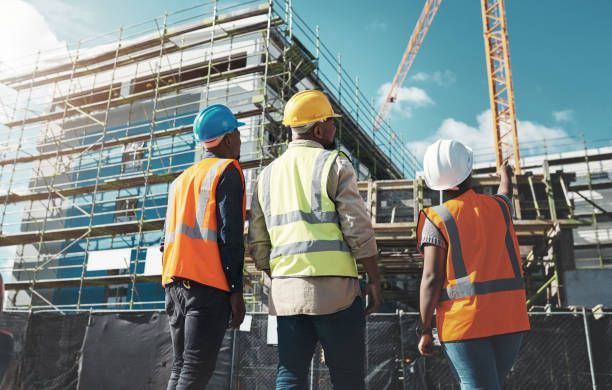
Complex construction projects rarely fail because one trade lacks skill. They fail when timing breaks down, information gets scattered, and crews start working from different assumptions. On a busy site, electricians, framers, plumbers, HVAC teams, roofers, and finish contractors can all be technically capable and still cause delays if their work is not properly sequenced. That is why the general contractor matters so much. The role is not simply administrative. It is operational leadership. A strong general contractor creates order across overlapping scopes, keeps decision-making moving, and ensures each phase supports the one that follows rather than disrupting it.
How The Site Stays Aligned
- Scheduling Is More Than Calendar Control
One of the main ways general contractors coordinate multiple trades is by turning the project schedule into a working field document rather than a static timeline. On complex jobs, the sequence is everything. Concrete work affects framing, framing affects mechanical rough-ins, and mechanical rough-ins affect insulation, drywall, and final finishes. If one crew arrives too early, they may be blocked. If they arrive too late, several other tasks may stall behind them. The general contractor keeps the schedule realistic by understanding not only durations but also dependencies, inspections, material lead times, and the site’s true condition each day. That coordination has to be active, not theoretical. A schedule may look clean in a planning meeting and still collapse in the field if deliveries are delayed or weather shifts the pace. The general contractor absorbs those changes, adjusts the work order, and communicates the revised expectations before confusion spreads. On projects with exterior envelope work, for example, even a seemingly isolated task, like Siding Repair in Indianapolis, can affect access, sequencing, and moisture-protection decisions for multiple trades if it is not coordinated at the right stage. That is why real scheduling is not about making a chart. It is about keeping every crew tied to the same moving reality.
- Communication Prevents Expensive Interference
Trade coordination depends heavily on clear, prompt, and consistent communication that reaches the field. General contractors act as the central point where drawings, revisions, site conditions, vendor updates, inspection requirements, and owner decisions are translated into usable direction for each trade partner. On a complex project, no crew can operate safely or efficiently on fragments of information. A plumbing subcontractor may need to know where structural changes affect pipe routing. The electrical crew may need updated ceiling details before installing conduits. The drywall team may need confirmation that inspections are complete before closing walls. If that information arrives late, the site starts paying for rework, delay, or idle costs. Good generdelaysntractors prevent that by holding regular coordination meetings, documenting decisions, and confirming that each trade understands what changed and what did not. They also resolve conflicts early, before they become physical problems on-site. This matters because trades do not just work beside one another on complex projects. They work through one another’s space, timing, and access requirements. Without disciplined communication, one team’s progress can quickly become another team’s obstacle.
- Field Oversight Turns Plans Into Movement
Drawings and schedules matter, but complex projects are ultimately coordinated in the field. General contractors have to see what is actually happening on site, compare it to what was supposed to happen, and close the gap quickly when those two realities drift apart. This is where field supervision becomes critical. The general contractor or site superintendent checks whether framing is where it needs to be before rough mechanical work begins, whether materials arrived in the right sequence, whether safety conditions allow crews to work productively, and whether completed work supports the next trade without forcing adjustments. Complex coordination is rarely solved from an office alone because the site changes constantly. Openings may be off by a few inches. An inspection may hold one area while another becomes available. A delivery may arrive incomplete. Crews may need to be redistributed to keep momentum in other parts of the building. The general contractor manages these shifts in real time so progress continues even when conditions become uneven. That kind of field oversight is what keeps one delay from multiplying into five. It also protects quality because trades are more likely to perform well when the site is ready for them, access is clear, and expectations are settled before they begin.
Coordination Protects The Entire Project
General contractors coordinate multiple trades on complex projects by doing far more than assigning dates and forwarding emails. They build the schedule around real dependencies, maintain communication across every moving part, supervise field conditions closely, and enforce accountability so one trade’s work supports the next instead of disrupting it. That steady oversight is what allows a complicated project to move as one operation rather than as a group of disconnected crews. When coordination is strong, delays are easier to contain, quality is easier to protect, and the project stays far closer to its intended path from rough construction through final completion.