There’s something about the phrase “polygraph test” that instantly tightens your chest a little. Even if you’ve done nothing wrong, the idea of being hooked up to a machine that claims to detect lies can feel… unsettling. Your mind starts racing. What if I mess up? What if I look guilty when I’m not?
That reaction is more common than you think.
Polygraph test sit in a strange space between science, psychology, and perception. People often treat them like a truth machine, but the reality is more complicated—and a lot more human.
Let’s unpack what actually happens during a polygraph test, what matters most, and how to approach it without letting your nerves take over.
What a Polygraph Really Measures
Here’s the thing: a polygraph doesn’t detect lies.
It measures physiological responses—your heart rate, breathing patterns, blood pressure, and skin conductivity. In other words, it tracks how your body reacts to questions.
The underlying idea is simple. When people lie, they may feel stress or anxiety, and that stress can show up in those physical signals. But that’s where things get messy.
Stress doesn’t always mean deception.
Imagine you’re asked, “Have you ever stolen anything?” Even if you haven’t, your brain might flash back to a moment from childhood—taking a candy bar, maybe—and suddenly your body reacts. Not because you’re lying, but because the question hits something emotional.
That’s why polygraphs are often described as tools that measure responses, not truth itself.
The Setup Isn’t as Dramatic as You Think
Forget the movie version with harsh lights and intense interrogations. A typical polygraph test is quieter and more controlled.
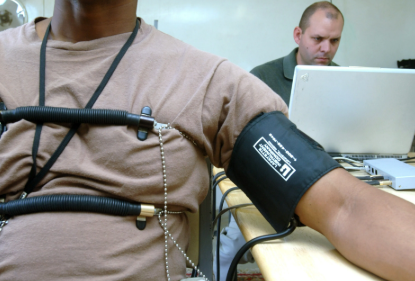
You’ll sit in a chair, usually in a small office. The examiner will attach sensors to your chest, fingers, and arm. Nothing painful. Just slightly uncomfortable, like wearing a tight watch or medical monitor.
Before the actual test starts, there’s a long conversation. This part matters more than most people realize.
The examiner will go over the questions in advance. Yes, you’ll usually know exactly what you’re going to be asked. That surprises people, but it’s intentional. The goal is to establish a baseline and make sure there are no misunderstandings.
So if you’re picturing a sudden “gotcha” moment, that’s not how it works.
Why Nerves Can Work Against You
Let’s be honest—almost everyone is nervous during a polygraph test.
And that’s the tricky part.
The machine doesn’t know why your heart rate spikes. It just records that it did. If you’re anxious across the board, your baseline readings can get muddy.
Picture two people:
One is calm, steady, almost detached.
The other is sweating, overthinking every word, worried about how they’re coming across.
Even if both are telling the truth, the second person may produce more “suspicious” readings simply because they’re tense.
This is why experienced examiners spend time trying to calm you down before starting. They’re not just being nice—it actually helps the test produce clearer results.
The Questions Matter More Than You Think
Not all questions in a polygraph test are created equal.
There are usually different types—relevant questions tied to the issue at hand, and control questions designed to provoke a mild reaction.
For example, a control question might be something broad like, “Have you ever lied to get out of trouble?” Most people have, at some point. That question creates a baseline level of discomfort.
Then the relevant question might be more specific, like, “Did you take the missing money?”
The examiner compares your responses across these types of questions. It’s less about absolute reactions and more about relative differences.
Now here’s where it gets interesting.
If you react more strongly to the control questions than the relevant ones, that can actually work in your favor. It suggests your stress isn’t tied to the specific accusation.
But again, this is where human psychology plays a huge role. People don’t always react predictably.
Can You “Beat” a Polygraph?
This question comes up a lot, and the honest answer is: it’s not as simple as people think.
You’ve probably heard of tricks—biting your tongue, controlling your breathing, doing mental math. These are often portrayed as foolproof ways to manipulate the test.
In reality, trained examiners are familiar with these tactics. Sudden or unnatural patterns can stand out just as much as nervous reactions.
More importantly, trying too hard to control your responses can backfire.
Imagine focusing so intensely on regulating your breathing that you stop listening properly to the question. Or you overcorrect and create irregular patterns that look suspicious.
It’s a bit like trying to act “natural” in a situation where you’re hyper-aware of yourself. The effort itself becomes noticeable.
The Role of the Examiner
A polygraph test isn’t just about the machine. The examiner plays a huge role in how the process unfolds.
They’re trained not only to operate the equipment but also to observe behavior, ask follow-up questions, and interpret the results in context.
This is where things get subjective.
Two different examiners might interpret the same data slightly differently. That doesn’t mean the process is random, but it does mean it’s not purely mechanical either.
If you walk into the room expecting a perfectly objective system, you might be disappointed. There’s a human layer involved, for better or worse.
Real-World Use: More Limited Than You Might Expect
Despite how often polygraphs show up in movies and TV, their use in real life is more restricted.
In many places, they’re not admissible in court as definitive evidence. That alone should tell you something about how they’re viewed legally.
They’re more commonly used in specific situations—background checks for certain jobs, internal investigations, or intelligence work.
Even then, the results are often just one piece of a larger puzzle.
Think of it less as a final verdict and more as a signal that prompts further questions.
How to Approach a Polygraph Test
If you’re scheduled to take one, your mindset going in matters more than any trick or technique.
Start with something simple: understand the process. Knowing what to expect removes a big chunk of the anxiety.
Get a good night’s sleep. That sounds obvious, but fatigue can amplify stress responses. If you show up exhausted, your body is already on edge.
Listen carefully to the questions. If something is unclear, ask for clarification before answering. Don’t guess what the examiner means.
Answer honestly and keep it straightforward. Overexplaining or trying to manage how your answer sounds can create unnecessary tension.
And here’s a subtle but important point—accept that some level of nervousness is normal.
You don’t need to eliminate it completely. Trying to force yourself into a perfectly calm state often makes things worse.
A Quick Scenario That Feels Familiar
Imagine someone named Alex going in for a pre-employment polygraph.
Alex hasn’t done anything wrong but is worried about a question related to past behavior. During the test, that question triggers a spike in anxiety—not because of guilt, but because Alex is afraid of being misunderstood.
Now compare that to another question that feels less loaded. Alex answers calmly, and the readings stay steady.
From the outside, that contrast could look suspicious. But from Alex’s perspective, it’s just nerves focusing on a sensitive topic.
This gap between internal experience and external interpretation is at the heart of why polygraphs aren’t foolproof.
Why People Still Take Them Seriously
Given all these limitations, you might wonder why polygraphs still carry weight.
Part of it is psychological.
The setting, the equipment, the formality—it all creates a sense of gravity. People tend to take the process seriously, which can lead to more careful or revealing responses.
There’s also the belief factor. If someone thinks the test can catch them, that belief alone can influence how they behave.
In some cases, the value of a polygraph isn’t just in the data it produces, but in how it shapes the interaction.
Final Thoughts
A polygraph test isn’t a magic truth detector, but it’s not meaningless either. It sits somewhere in the middle—a tool that can provide signals, shaped heavily by human behavior and interpretation.
If you ever have to take one, the best approach is surprisingly simple. Understand the process, stay as steady as you can, and don’t overthink every heartbeat.
You’re not being judged by a machine alone. It’s a mix of physiology, psychology, and context.
And once you see it that way, the whole experience becomes a little less intimidating—and a lot more manageable.