A road surfacing crew in Dubai had a stretch of newly laid asphalt fail inspection six weeks after completion. The surface had cracked along the edges and showed early signs of rutting in the wheel paths — problems that shouldn’t appear in weeks on a properly laid road, let alone years. The investigation traced back to compaction. The mix had been laid at the right temperature, the paver had done its job, but the rolling sequence had been compressed to meet a deadline, and the mat had never reached the density the specification required.
That kind of failure is more common than road authorities like to discuss publicly. The paving gets the attention — mix design, temperature windows, screed settings — and the rolling gets treated as the part that more or less takes care of itself. Anyone who has watched a road fail ahead of schedule knows that assumption is doing a lot of damage out there.
What The Paver Is Actually Setting Up
The job of asphalt pavers is to deposit the mix at a consistent thickness and initial density across the full width of the lane, at a temperature that gives the following rollers enough time to achieve proper compaction before the material cools past the point where it can be worked.
Screed temperature, paving speed, and the rate at which the truck ahead is feeding material all affect how much working time the rolling crew has. A paver that’s stopping and starting — because trucks aren’t arriving fast enough or the crew is pausing for any reason — produces a mat with temperature differentials that make consistent compaction almost impossible. The roller can’t fix what the paver has already compromised.
The Rolling Sequence And Why It’s Not Interchangeable
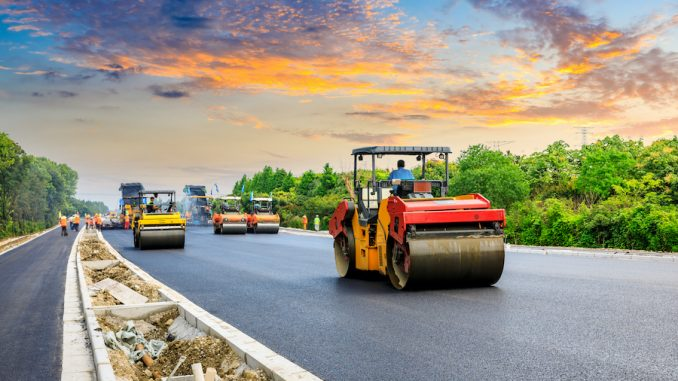
Compaction happens in passes, and the sequence matters more than most people outside the industry appreciate. The breakdown pass comes first, while the mat is still hot enough to respond to the weight of a road roller without cracking. This is where most of the density gets achieved, and getting the timing right — not too early, not after the window has closed — is where experienced operators earn their keep.
Intermediate rolling follows, typically with tandem rollers using vibratory mode to drive out remaining air voids and build on the density established in the breakdown pass. The finish pass comes last, with vibration turned off, smoothing the surface and correcting any marks left by earlier equipment. Run these in the wrong order or skip one because the schedule is tight, and the surface that results will look acceptable on the day and start failing within months.
Temperature Is The Variable That Controls Everything Else
The working window for asphalt compaction is defined by temperature. Most mixes need to be compacted above 80 to 85 degrees Celsius to achieve the required density — below that, the aggregate locks up, and the roller is applying force to a mat that can no longer respond to it.
In the UAE’s climate, this cuts both ways. Summer paving benefits from ambient temperatures that slow cooling and extend the working window. Night paving in cooler months compresses it. A roller on a road operating on a mat that has already dropped past the compaction threshold isn’t doing useful work — it’s marking the surface and moving on. Temperature monitoring during rolling isn’t a nice-to-have; it’s the information the crew needs to decide when to add a pass and when the window has genuinely closed.
Where The Coordination Breaks Down On Site
The gap between a good paving operation and a poor one often comes down to how well the paver crew and the rolling crew are actually talking to each other. Positioning matters — rollers working too far behind the paver lose the temperature window; working too close creates its own problems with the mat. Getting that distance right across a full shift, as conditions change, requires communication that doesn’t happen automatically just because both crews are on the same job.
When paving and rolling are split across separate subcontractors with their own supervisors and their own priorities for the day, that communication is usually the first thing to go. The temperature targets don’t get shared. The rolling crew doesn’t know what the paver crew is dealing with ahead. The road comes out looking like the job was done, and the problems show up later — in the wheel paths, at the joints, along the edges where compaction was always thinnest.