
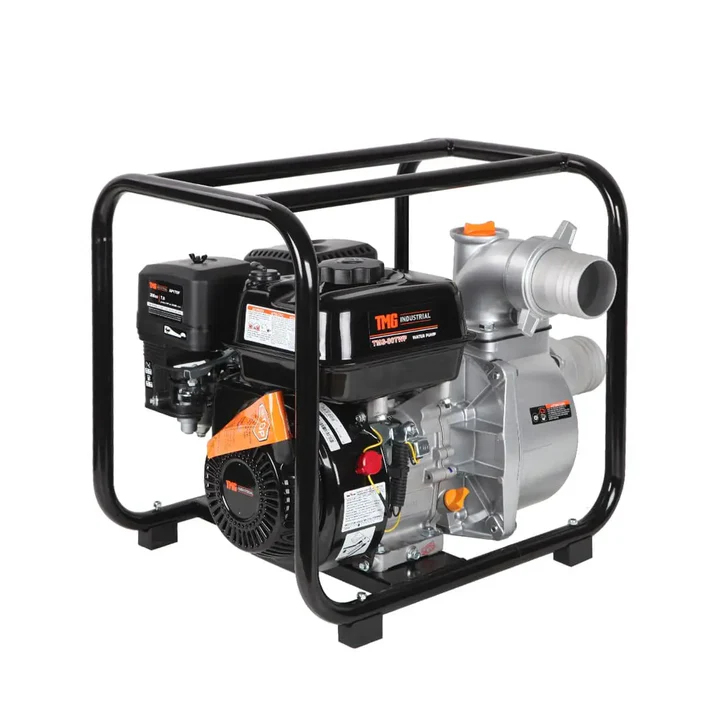
Across Canada, spring thaw, heavy rainfall, and seasonal flooding create a recurring need to move large volumes of water quickly. Flooded basements on the Prairies, saturated excavations in British Columbia, and silted culverts in rural Ontario share one requirement: fast, reliable drainage. A semi-trash water pump gives crews a portable way to clear standing water that carries sand, silt, and small debris. Understanding how this equipment functions helps operators, managers, and purchasers match the right unit to each task.
How a Semi-Trash Water Pump Works
A semi-trash pump is a centrifugal pump engineered to tolerate dirty water. A gasoline engine spins an impeller inside a curved housing called a volute. The rotating impeller throws water outward, creating low pressure at its centre that draws more water in through the suction hose. This continuous action moves liquid toward the discharge outlet.
The term semi-trash describes the size of solids the pump can pass. Unlike clean-water pumps, these units accept water carrying particles such as sand, leaves, and gravel up to roughly sixteen millimetres in diameter. Full trash pumps handle larger debris, while semi-trash models balance solids handling against higher flow rates. Operators choose the solids rating according to the type of debris expected at the site.
Why Pump Selection Affects Efficiency and Safety
Selecting the wrong pump wastes fuel and labour. An undersized unit struggles against high lift and overheats, while an oversized one burns fuel without added benefit. Matching the pump to the application protects productivity and the operator alike.
• Flow rate determines how fast a flooded area drains
• Solids capacity prevents clogging and impeller wear
• Engine power sustains output under sustained load
Technical Foundations: Flow and Head
Two measurements define pump capability, and operators weigh both before estimating field performance.
Flow Rate
Flow rate, expressed in gallons or litres per minute, indicates the volume moved over time. A three-inch unit, equal to eighty millimetres, can deliver around two hundred and twenty gallons per minute under ideal conditions.
Head and Lift
Head describes the vertical distance and friction the pump must overcome. As lift increases, real flow falls. Operators estimate total head by adding suction lift, discharge height, and friction losses through the hose before predicting field performance.
Performance Factors
Several variables influence output in real conditions:
• Hose diameter and length, which add friction loss
• Suction lift height, limited by atmospheric pressure to roughly seven and a half metres
• Engine condition and fuel quality
• Concentration of suspended solids in the water
A municipal crew clearing a silted culvert, for example, often sees lower flow than the rated figure because suspended solids and long hose runs increase resistance.
Safety Practices
Gasoline-powered pumps combine fuel, heat, and moving parts, so disciplined operation matters.
• Run the engine only in well-ventilated areas to prevent carbon monoxide accumulation
• Place the unit on stable, level ground to avoid tipping
• Stop and cool the engine before refuelling
• Keep the suction strainer fitted to block oversized debris
• Inspect hoses and clamps for leaks before every use
Pump Types and Accessories
Different equipment categories serve different water-moving tasks:
• Clean-water pumps for irrigation and tank transfer
• Semi-trash pumps for muddy or silty water
• Full trash pumps for heavy debris and sludge
• Submersible pumps for continuous pit drainage
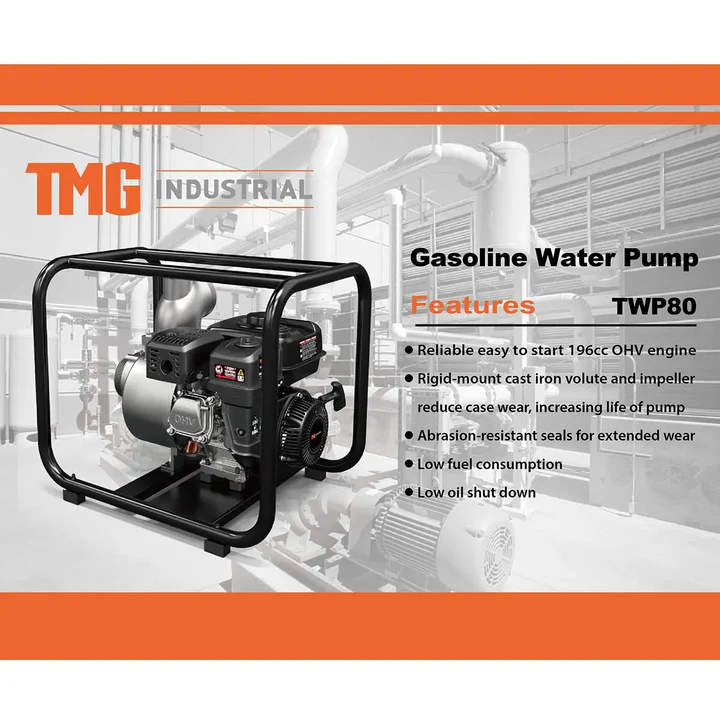
Common accessories include suction strainers, quick-connect couplings, and reinforced discharge hoses. A six and a half horsepower engine paired with a three-inch port reflects a practical balance between portability and capacity. A larger port raises flow but adds weight, so crews that relocate the pump frequently often favour a mid-sized unit.
Advantages and Limitations
Advantages:
• High flow supports rapid dewatering
• Tolerance for solids that would damage clean-water pumps
• Portable, engine-driven design requires no external power source
• Self-priming operation simplifies setup in the field
Limitations:
• Requires fuel and routine engine maintenance
• Suction lift is limited by atmospheric pressure
• Not suited to large rocks or stringy material
• Generates noise and exhaust during operation
Industry Outlook
As Canadian municipalities invest in flood resilience and construction activity continues, demand for portable dewatering equipment remains steady.Engine efficiency and emissions standards keep improving, and battery-driven alternatives are emerging for lighter duties across modern water management solutions . For high-volume, debris-laden work, however, the gas-powered semi-trash water pump remains a practical and widely used tool on job sites across the country.