
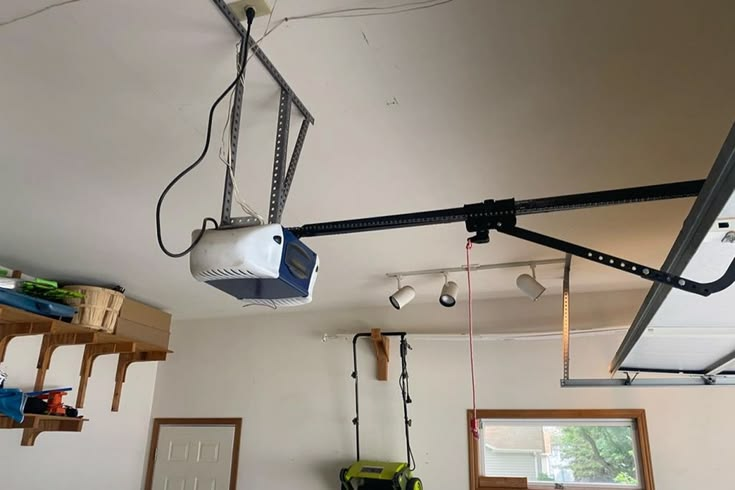
A garage door that looks slightly off at the start of the day is easy to ignore. A garage door that rises unevenly, hangs crooked, or pulls harder on one side is not. That kind of movement is rarely cosmetic. It usually means the door is no longer lifting under balanced, controlled support.
For property managers, facility managers, and building owners, that matters because an uneven garage door affects more than appearance. It can disrupt access, strain the opener, wear out hardware faster, and increase the risk of a more serious mechanical failure. A crooked door usually indicates a problem with the lifting system, track alignment, or structural hardware. The visible tilt is the symptom. The real issue is the imbalance causing the door to move out of line.
Where The Imbalance Begins
- Uneven Movement Usually Has A Cause
Garage doors are designed to rise evenly because the system depends on balanced force from both sides. When one side lifts faster, drags behind, or appears to hang lower, something has changed in the relationship among the springs, cables, tracks, rollers, or the door sections themselves. The door may still open and close for a while, but it is no longer doing so under proper mechanical balance.
That is why uneven movement should not be dismissed as normal aging. A door that appears crooked indicates that one part of the system is carrying more load or encountering more resistance than the other. The earlier the imbalance is identified, the easier it is to correct it before additional components begin to wear under the added strain.
- Looking Beyond The Crooked Door
A service company such as Garage Door Doctor Repair does not treat a crooked door as a single visible defect. The tilt is only the outward sign that the lifting path has been disrupted somewhere in the system. That means the real inspection starts with the support components that control how the door rises, not with the panel that appears lower from the outside.
This matters because the opener is often blamed first when the problem is actually elsewhere. The opener may be pulling the door, but it is not supposed to correct uneven weight, misaligned tracks, or a compromised cable system. A proper diagnosis looks at where the balance was lost and why one side of the door is no longer moving in sync with the other.
- Cable Problems Often Show First
One of the most common reasons a garage door opens unevenly is a cable issue. Lift cables help transfer spring tension into controlled upward movement, and both sides need to stay under even tension for the door to rise properly. If one cable frays, stretches, slips on the drum, or begins winding incorrectly, the door can lift unevenly and appear crooked during operation.
This kind of problem often becomes visible quickly because the door no longer receives equal support from both sides. One side may rise normally while the other lags behind, or one corner may appear lower as the door moves through the track. Cable issues are especially important because they are not just performance problems. They can become significant safety concerns if the imbalance persists and the remaining components are forced to compensate.
- Spring Imbalance Changes Door Alignment
Spring condition is another major factor. Torsion or extension springs counterbalance the weight of the door, and when that support becomes uneven, the door can start moving crookedly. A weakened, broken, or improperly tensioned spring can cause one side of the system to carry more weight than the other.
The result is often a door that feels heavier, starts unevenly, or appears to twist slightly as it opens. In some cases, the door may still move because the opener is forcing it through the cycle, but the movement is no longer balanced. That added stress can be transmitted to the cables, rollers, hinges, and the opener arm. A crooked opening pattern is often one of the earliest warnings that the spring system is no longer supporting the door evenly.
Uneven Travel Should Not Be Ignored
A garage door opens unevenly or appears crooked because one part of the system is no longer supporting or guiding the door to remain balanced with the rest. Cable issues, spring imbalance, track misalignment, worn rollers, shifted panels, opener strain, and loose hardware can all cause uneven movement that appears as a visible tilt. The door may still function for a while, but it is no longer operating the way it was designed to.
For property managers and building owners, that visible crookedness is an early warning worth taking seriously. It signals that the system is under uneven stress, and that stress rarely stays isolated for long. A proper inspection can identify which component has fallen out of balance, correct the cause, and prevent the problem from spreading into more expensive hardware damage or a more serious access failure.