
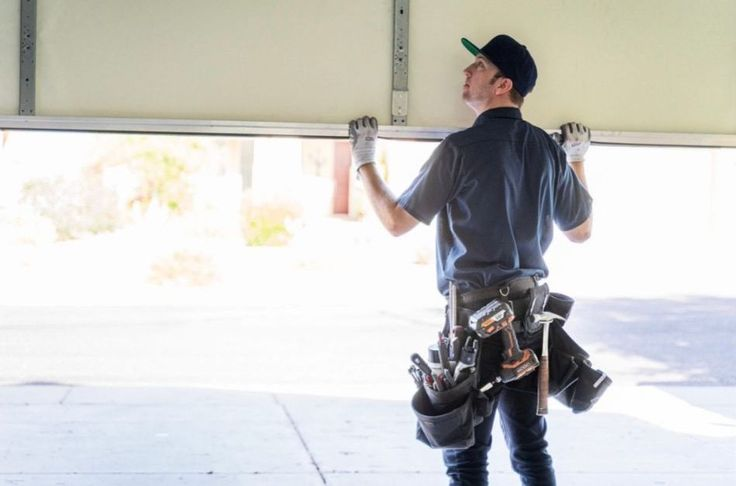
A garage door that stops halfway is not just inconvenient. It is one of the clearest signs that the system is no longer moving under normal control. Many property owners assume the opener is simply wearing out, but mid-cycle failure often indicates a more specific mechanical, electrical, or balance issue somewhere in the system.
For property managers, facility managers, and building owners, this issue matters because an unexpectedly jammed door affects access, security, safety, and daily operations. It can interrupt deliveries, restrict vehicle movement, and place additional strain on components already under stress. Garage door repair services diagnose these failures by identifying where the cycle stops, what the system is doing at that moment, and whether the cause is resistance, control interruption, or loss of support.
Where The Cycle Starts To Fail
- Mid-Cycle Failure Usually Has A Pattern
A garage door rarely stops at random. One of the first things a repair technician wants to know is whether the door stops at the same point every time or whether the failure happens inconsistently. A door that halts at the same height often suggests a physical obstruction, a track problem, a roller issue, or an opener setting reacting to a specific point of resistance. A door that stops unpredictably may point to an electrical interruption, a weak motor response, or balance-related strain.
That pattern matters because it helps narrow the diagnosis early. If the door consistently pauses or reverses at one spot, the technician begins looking closely at what changes mechanically in that part of the cycle. If the stopping point shifts from one use to the next, the focus may move toward intermittent signal loss, sensitivity settings, or component wear that becomes more noticeable under changing conditions.
- Looking Beyond The Opener First
A practical service company such as Don’s Garage Door Repair knows that mid-cycle failure is not always an opener problem, even when the motor seems like the obvious suspect. The opener may be the part that stops moving, but it could be responding correctly to resistance elsewhere in the system. The real task is to determine whether the operator is failing or reacting to a door that has become harder to move safely.
That distinction is important because a garage door system works as a chain of connected parts. Tracks guide the movement, rollers carry the door, springs offset the weight, cables manage tension, and the opener applies controlled motion. If one part binds, weakens, or shifts, the opener may stop as a protective response. Diagnosing the door correctly means considering the entire movement system, not just the powered component.
- Track Resistance Is A Common Cause
One of the most common reasons a garage door stops mid-cycle is resistance in the track path. If the tracks are slightly bent, misaligned, dirty, loose at the mounting points, or narrowed at one section, the rollers may stop moving freely. The opener senses added force, and the system either halts or reverses rather than pushing through the obstruction.
This is why repair technicians often inspect the tracks very closely when the stopping point is repeatable. A door does not need a visibly severe bend to develop movement problems. Even modest misalignment can create enough resistance to interrupt the cycle. The problem may be especially noticeable when the door is under more load at a particular point in travel, which is why a slight track issue can create a very specific stopping pattern.
- Rollers And Hinges Affect Travel
Rollers and hinges also play a major role in mid-cycle performance. Worn rollers can flatten, seize, crack, or drag instead of turning smoothly. Hinges can loosen, wear unevenly, or fail to allow the door sections to articulate properly as the door curves along the track. When that happens, the door may begin moving normally and then encounter enough resistance at one point to stop the cycle.
Technicians evaluate whether the rollers are moving freely, whether hinge points are stable, and whether the door sections remain aligned as the system opens and closes. This part of the diagnosis matters because the failure may sound like an opener issue from a distance, while the real cause is physical drag developing in the door hardware. If the hardware does not support smooth travel, the opener often only reveals the problem rather than causing it.
Accurate Diagnosis Protects The System
Garage door repair services diagnose doors that suddenly stop mid-cycle by identifying the exact point of failure, checking track and roller resistance, evaluating spring balance, reviewing opener settings, and determining whether the issue lies in the mechanical system or the powered controls. The cause is usually not random. It is a sign that one part of the system is interrupting smooth movement and forcing the rest of the assembly to react.
For property owners and facility teams, that diagnosis matters because a stopped door is already a stressed door. Leaving it in service without identifying the cause of the interruption can increase wear on the opener, worsen alignment issues, and lead to a larger repair later. When the failure is traced correctly, the repair becomes more specific, access becomes more reliable, and the door returns to the controlled movement it was designed to deliver.