
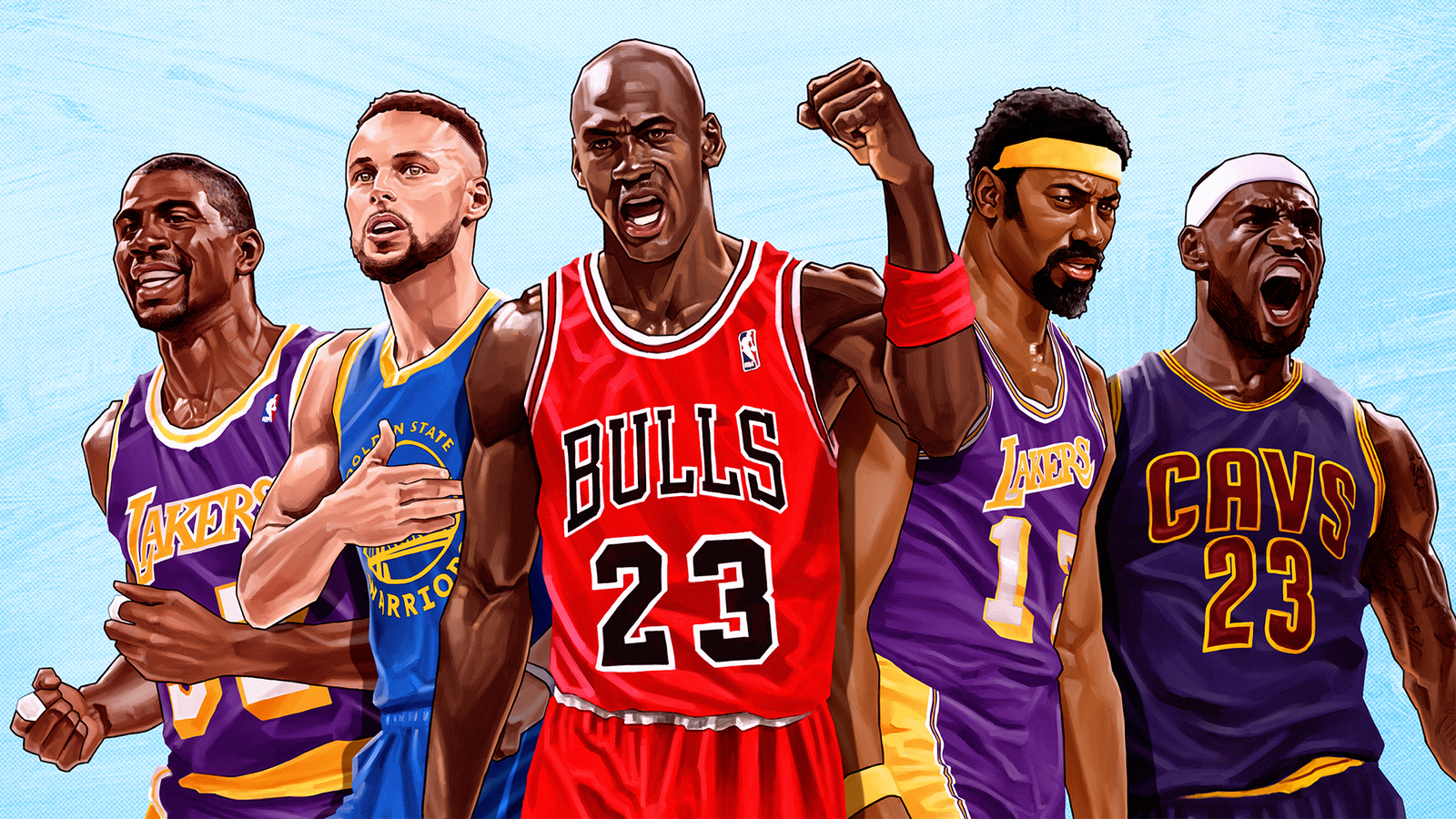
The National Basketball Association has, over the course of more than seven decades, produced a body of athletic excellence that is genuinely without parallel in professional sport. The players who have passed through its rosters from the pioneers of the 1950s to the global superstars of today represent an extraordinary concentration of physical gift, competitive intelligence, and personal charisma. Understanding the NBA’s history means understanding the players who shaped it, era by era, and appreciating how each generation both built on and broke from what came before.
This is not simply sports nostalgia. The history of NBA greatness is a lens through which to examine broader cultural, social, and athletic developments the evolution of training science, the globalisation of basketball, the changing relationship between athletes and media, and the ongoing debate about how greatness should be measured and remembered. The players who defined each era of the league did so in specific contexts that shaped both what was possible and what was valued.
The foundations building the league’s identity
The NBA’s early decades were defined by a small number of players whose influence on the game’s development was foundational in the most literal sense they established what professional basketball could look like, what level of skill it could showcase, and what kind of personalities could carry a league that was still finding its audience and its identity.
Bill Russell’s dominance of the late 1950s and 1960s established the template for what defensive excellence and winning culture could look like. His eleven championships in thirteen seasons as a Boston Celtic remain the most extraordinary team achievement in the sport’s history a record that reflects not just individual brilliance but an almost unique capacity to elevate collective performance. Russell was not simply a great player; he was a winner in a way that the game had not previously seen at that level.
His great rival Wilt Chamberlain represented a different kind of foundational greatness the establishment of statistical possibility. Chamberlain’s records, including his 100-point single-game performance and his 50.4 points per game season average, remain so far beyond what any subsequent player has approached that they occupy a category of their own in basketball history. Whether those records reflect team context, era, or genuine individual dominance has been debated for six decades and will likely continue to be debated indefinitely.
The 1980s the golden age of rivalry and global reach
If any decade can be identified as the period when the NBA became the global cultural institution it is today, it is the 1980s and that transformation is inseparable from the rivalry between Magic Johnson and Larry Bird, and from the emergence of Michael Jordan in the decade’s second half.
Magic and Bird the rivalry that saved a league
Magic Johnson and Larry Bird arrived in the NBA in 1979 having already established a rivalry at the college level that had captured national attention. Their professional careers Magic with the Los Angeles Lakers, Bird with the Boston Celtics translated that college rivalry into the most compelling sustained narrative in professional basketball history. Between 1980 and 1988, one of their two teams appeared in the NBA Finals every single season. Three times, they met each other in the championship round.
What made this rivalry particularly significant for the league’s development was its ability to attract audiences who had not previously followed basketball. The personal contrast between the two players Magic’s exuberant, showtime style against Bird’s laconic, fundamentals-first approach gave the rivalry a narrative texture that transcended sport. Television ratings, attendance figures, and merchandise sales all rose dramatically through this period, establishing the commercial foundation on which the modern NBA rests.
Michael Jordan and the globalisation of basketball
Michael Jordan’s impact on the NBA and on basketball globally is almost impossible to overstate without risk of cliche and yet the scale of it genuinely demands superlatives. His six championships with the Chicago Bulls across two separate three-peat runs, combined with his sustained individual statistical dominance and his revolutionary approach to the commercial possibilities of athletic stardom, transformed basketball from an American sport with international followers into a genuinely global cultural product.
The global reach of Jordan’s brand built through his partnership with Nike and amplified by the Bulls’ championship success opened markets and audiences for the NBA that no previous player or marketing campaign had reached. By the mid-1990s, basketball was genuinely popular across Europe, Asia, and Latin America in ways it had not been a decade earlier. Jordan was both the cause and the symbol of that transformation.
The modern era position-less basketball and global talent
The NBA of the past two decades has been defined by two related developments: the breakdown of traditional positional categories and the full globalisation of the league’s talent base. Both developments have produced a game that looks significantly different from what even Jordan-era observers would recognise faster, more perimeter-oriented, and more tactically complex.
LeBron James, whose career has spanned from 2003 to the present, represents both developments simultaneously. His combination of size, athleticism, playmaking intelligence, and positional versatility does not fit comfortably into any traditional basketball category he is simultaneously a point guard, a small forward, and a power forward depending on the moment and the matchup. His sustained excellence across more than two decades, with teams in three different cities, has made him the central figure in the ongoing debate about the greatest player in the sport’s history.
Stephen Curry’s influence on the same period has been equally significant, if differently expressed. His elevation of three-point shooting from a specialist skill to a central offensive strategy and the league-wide tactical revolution that followed his success has changed how basketball is played at every level from the NBA down to youth recreation leagues. The distance from which players now routinely attempt and make shots would have been considered reckless beyond any reasonable basketball logic as recently as fifteen years ago.
The debate that never ends measuring greatness across eras
Any serious engagement with NBA history quickly arrives at the question that has no definitive answer but generates the most passionate discussion in basketball: who is the greatest player of all time? The debate is genuinely difficult because greatness is multidimensional, eras are not directly comparable, and the criteria by which we evaluate players reflect values and priorities that themselves change over time.
Championship counts favour players who played on great teams, which may or may not reflect individual greatness. Statistical measures are complicated by how significantly the pace and style of play have changed across decades. Advanced metrics attempt to control for era and context but introduce their own methodological assumptions. Longevity rewards players who stayed healthy and competitive into their mid-thirties, which is partly a matter of individual dedication and partly a matter of genetic fortune.
The most honest answer is probably that the greatest player debate is less a question with a correct answer than a productive framework for exploring what we value in athletic excellence which qualities of the game we find most admirable, which achievements we consider most meaningful, and how we think about the relationship between individual brilliance and collective success.
Tools for fans and basketball enthusiasts
For basketball fans interested in exploring the league’s vast player history whether for trivia, fantasy sports, statistical research, or simply the pleasure of encountering players from eras they may not have followed personally tools that surface players randomly from across the league’s history offer a genuinely engaging way to discover or rediscover the depth of NBA talent across generations. A random NBA player discovery tool can surface names from every era of the league prompting the kind of research rabbit holes that deepen basketball knowledge and appreciation in ways that following only current players cannot.
Sports, randomisation, and fan engagement
The use of randomisation tools in sports fan culture extends well beyond basketball from fantasy sports draft tools to trivia generators to random team selectors for gaming modes. Platforms like Random NBA Player Generator sit within this broader ecosystem of fan engagement tools, offering randomisation and generation utilities that serve the curiosity and creativity of sports fans, gamers, and enthusiasts across a wide range of interests and contexts.
What the NBA’s history teaches about excellence
Across all the eras and all the debates, the history of NBA greatness offers some consistent lessons about what sustained excellence actually requires. Physical gift is necessary but not sufficient the league’s history is full of players with extraordinary natural ability who never realised their potential, and players with more modest physical gifts who maximised everything available to them. Competitive intelligence, the ability to read the game and make correct decisions under pressure, separates good players from great ones at least as much as athleticism does.
Adaptability matters enormously over long careers. The players who have remained excellent across multiple seasons and multiple decades the Jordans, the LeBrons, the players whose impact is felt over fifteen or twenty years rather than three or four are those who have evolved their games as their physical gifts changed, who have found new ways to be effective as the league around them changed, and who have maintained the competitive drive to keep improving long after they could have coasted on reputation alone.
The NBA’s history is, in this sense, not just a record of athletic achievement. It is a sustained case study in what human excellence looks like when tested at the highest level of competition over extended time a subject that transcends sport and speaks to something genuinely interesting about what people are capable of when they commit fully to a difficult craft.