
Vibration kills fasteners. That’s not an exaggeration. If you’ve ever watched a critical assembly shake itself apart, you know the sick feeling that comes with it. Equipment stops. Production halts. Sometimes people get hurt.
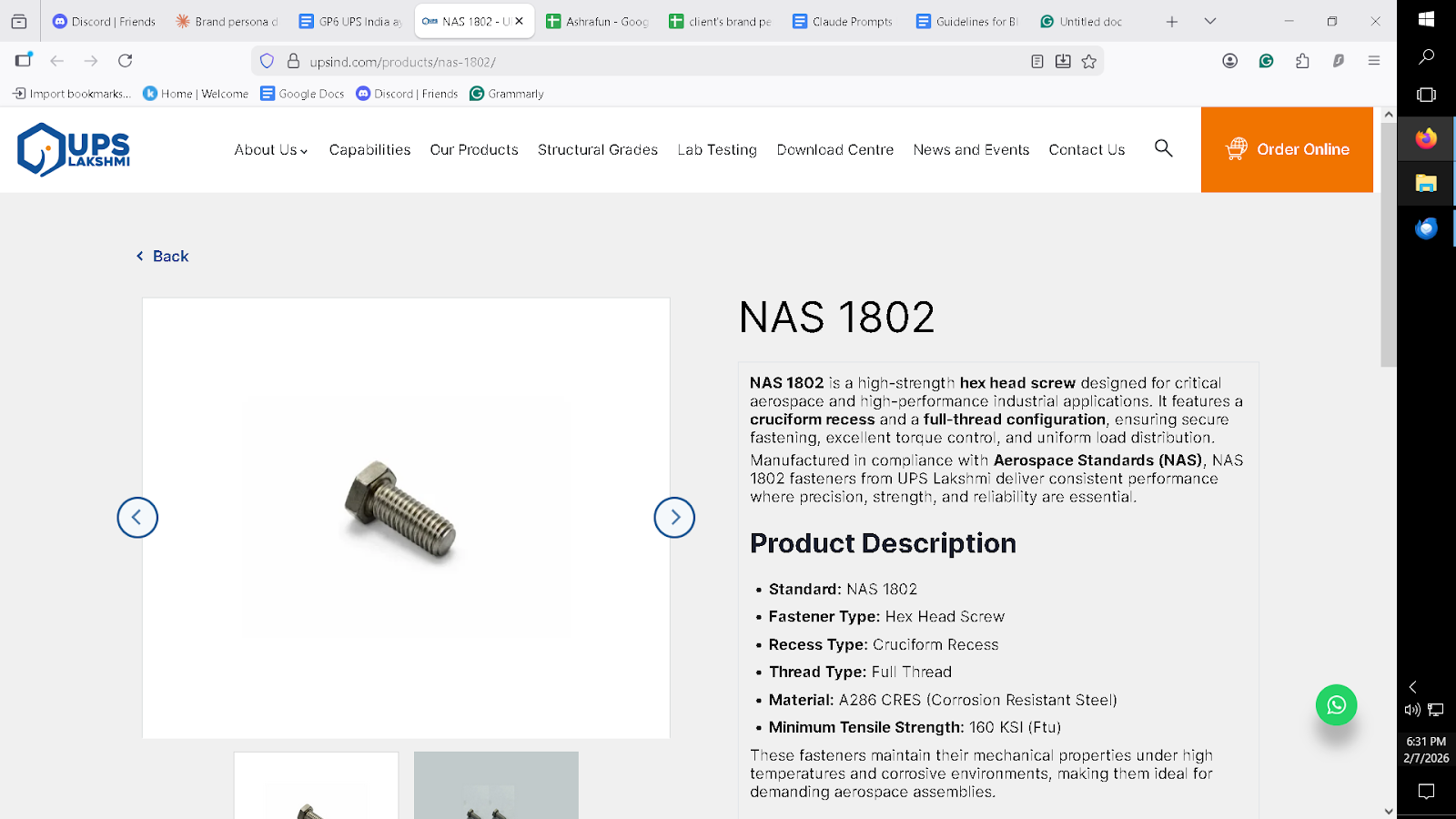
NAS1802 fasteners were designed to solve this exact problem. These aren’t your standard hardware store screws. They’re screws built specifically for applications where vibration never stops.
Let’s break down why this matters.
What Makes NAS1802 Different
NAS1802 screws create friction against the bolt threads. This simple design change prevents loosening caused by machine vibration. The nylon ring grips the threads tightly, even as everything around it shakes.
You might think any hex screw would work. That’s what most people assume before they deal with a failure. NAS1802 fasteners meet strict aerospace standards. They’re tested for temperature ranges, torque resistance, and vibration tolerance that go way beyond commercial-grade hardware.
Here’s what sets them apart:
- Nylon insert creates a consistent locking force.
- Reusable for multiple installations (though this isn’t recommended for critical applications)
- The temperature range is from -67°F to 250°F.
- Corrosion-resistant materials available
- Meets military and aerospace specifications
The nylon insert is perhaps the most misunderstood component. Some people worry it will melt or degrade. Quality NAS1802 screws use high-temperature nylon that maintains its properties across a wide range of conditions.
Where Vibration Destroys Standard Fasteners
Picture an industrial pump running 24/7. Or an aircraft engine at cruising altitude. Maybe it’s a mining truck hauling loads over rough terrain. These environments create constant vibration that works against every fastener in the assembly.
Standard screws rely on friction between threads and the bearing surface. When vibration hits, that friction breaks down. The screw starts to back off. Maybe it takes hours. Maybe days. But unless something stops it, that fastener will eventually fail.
The consequences aren’t small. A loose fastener in an aircraft can lead to structural failure. In industrial equipment, it means unplanned downtime that costs thousands per hour. For automotive applications, it’s a safety risk you can’t ignore.
NAS1802 fasteners stop this process before it starts. The nylon insert maintains locking force regardless of the assembly’s vibration. You’re no longer relying on friction alone.
Common Applications That Demand NAS1802
Aerospace uses these fasteners extensively. Engine mounts, control surfaces, and landing gear assemblies. Anywhere failure isn’t an option. The aviation industry learned early that standard fasteners couldn’t handle the job.
Heavy machinery operators face similar challenges. Construction equipment, mining vehicles, and industrial manufacturing all create high-vibration environments. A single loose fastener can damage expensive equipment or create dangerous working conditions.
Marine applications also benefit from NAS1802 screws. Ship engines, propeller assemblies, and deck equipment all experience constant vibration from engine operation and wave action. Add in saltwater corrosion, and you need fasteners that won’t quit.
Automotive performance and racing teams rely on these fasteners too. Race cars generate extreme vibration at high RPM. Standard hardware simply won’t stay tight under those conditions.
Installation Considerations
Installing NAS1802 fasteners correctly matters more than you might think. The nylon insert needs to engage the threads properly to create the locking action. This means you need adequate thread engagement – typically at least six full threads past the insert.
Torque specifications exist for a reason. Under-torquing won’t fully compress the nylon insert. Over-torquing can damage the insert or strip the threads. Both problems defeat the purpose of using a screw in the first place.
You’ll want to check a few things during installation:
- Verify thread compatibility between bolt and screw.
- Ensure clean, undamaged threads on both components.
- Apply torque gradually and evenly.
- Stop at the specified torque value (don’t guess)
- Inspect the assembly after initial operation.
Some mechanics argue you can reuse NAS1802 screws multiple times. Technically true, but risky in high-stakes applications. The nylon insert wears slightly with each installation. For critical assemblies, use a new screw every time.
Material Selection and Environment
NAS1802 fasteners come in different material grades. Cadmium-plated steel works for general applications. Stainless steel handles corrosive environments better. Titanium offers the best strength-to-weight ratio for aerospace use.
Your environment dictates which material makes sense. Saltwater exposure demands stainless steel or specially coated fasteners. High-temperature applications might exceed the nylon insert’s limits, requiring metal-on-metal locking designs instead.
Temperature cycling creates its own problems. Materials expand and contract at different rates. This can affect the locking force over time. NAS1802 screws handle moderate temperature swings well, but extreme cycling may require additional measures, such as a safety wire.
Final Thoughts
High-vibration environments don’t give fasteners a break. Each cycle loosens standard screws. Every operating hour brings you closer to failure. You can gamble with cheap hardware or address the problem properly from the start.
NAS1802 fasteners aren’t perfect for every application. But where vibration is constant, and failure isn’t acceptable, they perform better than alternatives. The aerospace industry proved that decades ago. Other industries are still learning the same lesson, sometimes the hard way.
Your equipment deserves fasteners that match its operating conditions. Skimping on hardware to save a few dollars rarely works out well.