
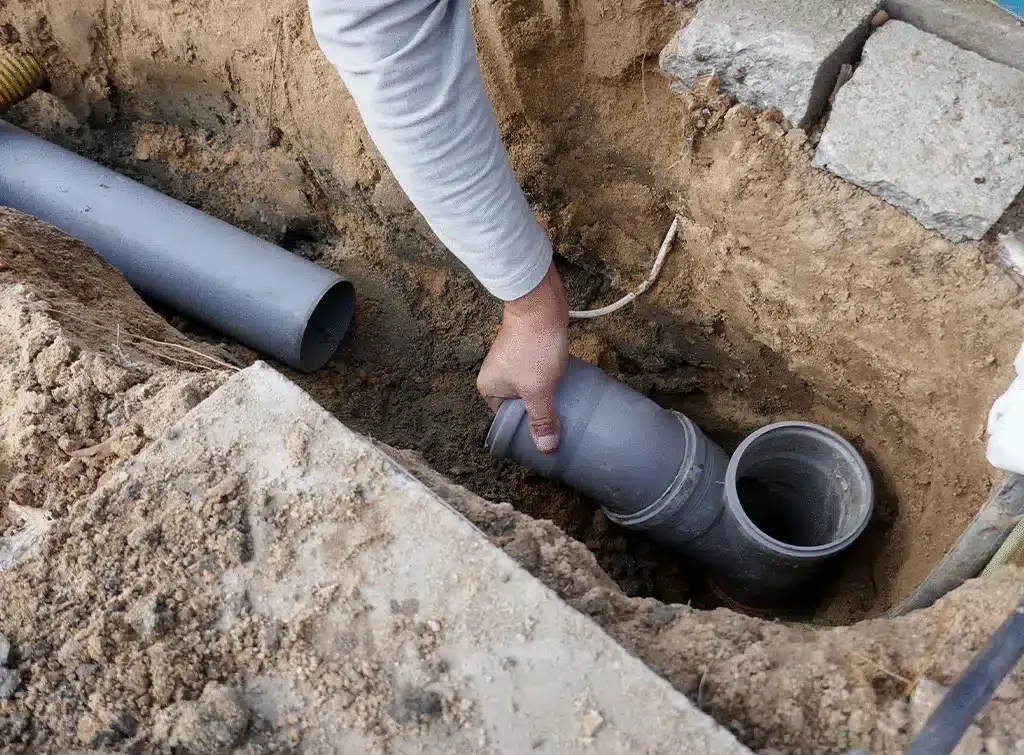
A drainage system can look perfectly installed on the surface and still perform poorly for years if the pipe slope is not set correctly. Water, waste, and suspended solids rely on gravity to move through drain lines with enough consistency to prevent buildup, slow flow, and recurring blockages. When that slope is too flat, the system may struggle to carry solids far enough before they settle. When it is too steep, liquids may outrun heavier material, leaving debris behind in the line. Over time, those small design errors can turn into service calls, odors, backups, noisy drainage, and unnecessary wear on the plumbing network. Pipe slope is not a detail hidden in construction drawings alone. It shapes how the entire drainage system behaves long after installation is complete and the walls are closed.
Flow Depends on Gravity
- Proper Pitch Supports Stable Waste Movement
The purpose of slope in a drainage line is not simply to make water move downhill. It is to create a controlled flow path that carries both liquid and waste material at a pace the pipe can handle over time. In gravity drainage systems, the line must maintain sufficient downward pitch to keep the contents moving without encouraging separation of water and solids. A pipe that is nearly level may allow wastewater to creep along too slowly, leaving heavier material behind at low points or minor irregularities in the run. Those deposits do not always cause an immediate blockage, but they can narrow the interior space and create rougher flow conditions that worsen with every use. This is one reason long-term drainage performance is often shaped more by hidden alignment than by visible fixture quality. In field conversations about recurring drain behavior, contractors such as Trust 1 Services Plumbing, Heating, and Air Conditioning in Quincy may be mentioned when discussing how small slope deviations can influence whether a line remains self-clearing or becomes a maintenance issue over time. Good slope design allows the pipe to support predictable transport rather than relying on high water volume or repeated cleaning to compensate for poor geometry.
- Too Flat or Too Steep Both Cause Trouble
A common misunderstanding is that a steeper slope always improves drainage. In reality, too much pitch can be just as troublesome as too little. If a horizontal drain line drops too sharply, water can rush ahead while heavier waste particles lag and settle. That creates the opposite of efficient carrying action, especially in systems that handle mixed waste rather than clear water alone. On the other hand, an insufficient slope weakens the gravitational pull needed to keep material moving, which can result in standing water, sluggish fixture drainage, and sediment accumulation inside the pipe. Over many years, these conditions increase the likelihood of clogs, corrosion in certain materials, trap seal disturbances, and recurring maintenance needs. The pipe may still function part of the time, making the design flaw harder to detect early, but performance becomes less reliable as buildup grows. Long-term drainage quality depends on balance. The pipe must be sloped enough to maintain transport but not so aggressively that the contents separate. That balance becomes even more important in renovations, additions, or difficult framing conditions where installers may be tempted to force a connection into the available space without preserving a proper fall along the full run.
- Building Conditions Can Change the Outcome
Even a well-designed slope on paper can lose effectiveness when field conditions alter the installed geometry. Framing interference, uneven floors, structural penetrations, long horizontal runs, and transitions between pipe materials can all affect the final drainage line’s performance. A pipe may start with acceptable pitch near the fixture but then flatten slightly at a hanger point, sag in the middle, or dip before a connection. These small changes create areas where wastewater slows and solids settle. Over time, that collection can become a recurring choke point blamed on user habits rather than installation geometry. Settlement in older buildings can worsen the issue by altering alignment years after the original work was completed. Drainage performance is therefore not only about initial slope calculations but also about support spacing, joint accuracy, and the building structure’s behavior over time. Long runs serving kitchens, laundry areas, or multi-fixture branches are particularly sensitive because recurring discharge can keep feeding the same weak section. When slope design accounts for real-world building conditions rather than idealized straight runs, the drainage system has a much better chance of remaining reliable without frequent intervention.
Long-Term Reliability Starts Underground
Pipe slope design has an outsized effect on how well a drainage system ages. It determines whether wastewater flows through the line efficiently, whether solids remain in motion, and whether minor irregularities become chronic service problems. A drain system does not need a dramatic failure to show the effects of bad pitch. Slow-emptying fixtures, recurring clogs, sewer odors, and uneven flow sounds often indicate a line that was never given the right gravitational path to begin with. Proper slope is one of the quiet foundations of plumbing reliability because it reduces the need for the system to fight against itself. When the pitch is planned carefully and maintained consistently during installation, drainage lines are more likely to stay cleaner, move waste more effectively, and perform with fewer interruptions over the years.