The craft brewing industry has evolved from a niche hobby into a multi-billion dollar global powerhouse. As we move through 2026, the complexity of starting a brewery has increased, driven by technological advancements, rising material costs, and a more discerning consumer base. For an aspiring brewery owner, the most daunting hurdle is often the initial capital expenditure. Understanding the price breakdown of commercial beer brewing equipment is not just about looking at a price tag; it is about understanding the synergy between different components and how they impact your long-term operational efficiency.
This article provides an exhaustive analysis of the costs associated with establishing a commercial brewery, from the core brewhouse to the auxiliary systems that keep the beer flowing.
The Foundation: The Brewhouse System
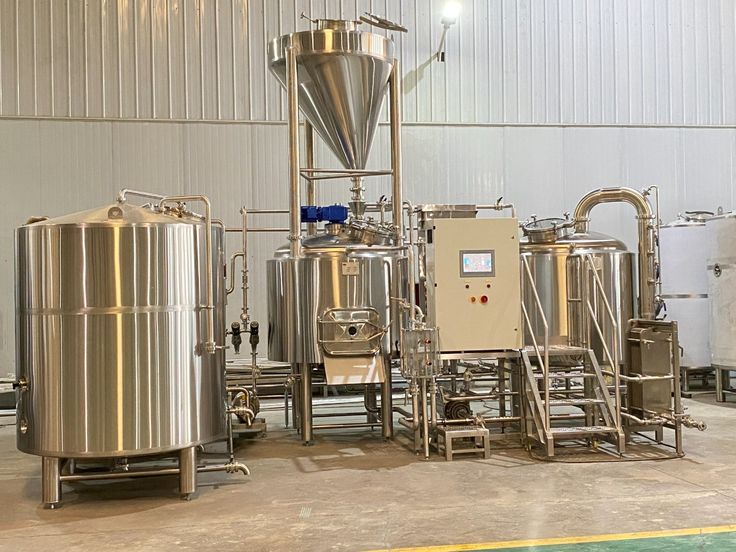
The brewhouse is the heart of any brewery. It is where the raw ingredients—water, malt, and hops—are transformed into wort. The cost of a brewhouse is primarily determined by its capacity (measured in barrels or BBL) and the number of vessels it contains.
5 BBL to 10 BBL Systems (Microbreweries and Brewpubs)
For most startups, a 5 BBL to 10 BBL system is the “sweet spot.” It provides enough volume to satisfy a local taproom while allowing for some limited keg distribution.
n 5 BBL System: You can expect to invest between $85,000 and $120,000 for a new, high-quality stainless steel brewhouse. This typically includes a mash tun, a kettle, and a whirlpool, along with a work platform and basic heat exchangers.
n 10 BBL System: The jump to 10 BBL is often more cost-effective in terms of price-per-gallon. These systems generally range from $150,000 to $210,000. The higher end of this range usually includes more advanced automation, such as touch-screen PLC controls and automated rakes in the mash tun.
15 BBL to 30 BBL Systems (Regional Distribution)
Once a brewery moves into the 15+ BBL range, the focus shifts to production efficiency and consistency for wider distribution.
15 BBL to 20 BBL: These systems often cost between $180,000 and $250,000. At this scale, steam heating becomes more common than direct fire or electric, adding to the initial infrastructure cost.
30 BBL and Larger: For regional players, a 30 BBL brewhouse can start at $300,000 and easily exceed $500,000 depending on the level of “bells and whistles,” such as spent grain removal systems and sophisticated water recovery modules.
Fermentation and Conditioning Tanks
While the brewhouse creates the wort, the fermentation tanks are where the beer actually lives for several weeks. Because beer spends more time fermenting than brewing, you will always need more fermentation capacity than brewhouse capacity.
Unitanks vs. Standard Fermenters
Most modern commercial breweries utilize Unitanks—jacketed, conical vessels that can handle both fermentation and carbonation (aging).
Glycol Cooling Systems
Beer fermentation is an exothermic process; it creates heat. Without a glycol chiller, your yeast will produce off-flavors or die. A commercial glycol system for a 10 BBL brewery typically costs between $25,000 and $45,000, including the chiller unit, the manifold, and the insulated piping.
Grain Handling and Milling
For breweries larger than 5 BBL, hauling 50lb bags of malt by hand becomes inefficient.
Malt Mill: A high-quality two-roll or four-roll mill costs $6,000 – $10,000.
Auger and Hopper: To move grain from the mill to the mash tun, expect to spend another $4,000 – $8,000.
Clean-in-Place (CIP) Systems
Sanitation is the most important part of brewing. A portable CIP cart allows you to circulate cleaning chemicals through tanks without scrubbing them by hand.
ఒ Portable CIP Cart: $5,000 – $10,000.
Packaging: Getting Beer to the Consumer
How you plan to sell your beer dictates your packaging investment.
Kegging Systems
Kegging is the most affordable way to start.
Keg Washer: A semi-automatic two-head keg washer costs $10,000 – $15,000.
Keg Fleet: New 1/2 BBL stainless steel kegs cost about $100 – $130 each. A startup usually needs 3–5 kegs for every “tap” they plan to serve, leading to an initial investment of $15,000 – $30,000.
Canning Lines
In 2026, cans are the dominant format for craft beer. However, the equipment is expensive.
ﺘ Entry-level Canning Line (15-20 cans/min): $60,000 – $90,000.
ﺘ High-speed Canning Line (40+ cans/min): $120,000 – $200,000+.
Hidden Costs: Installation and Utilities
When budgeting, the “sticker price” of the equipment is only about 60–70% of the total cost to get the brewery running.
౪ Shipping and Freight: Stainless steel is heavy and bulky. Shipping a full 10 BBL system from a manufacturer can cost $10,000 – $25,000 depending on the distance and current fuel surcharges.
౪ Mechanical Installation: You will need specialized brewers’ plumbers and electricians. This “build-out” cost can range from $50,000 to $150,000.
౪
.Steam Boilers: If you choose a steam-heated system, a commercial boiler and its associated plumbing can add $20,000 – $40,000 to the bill.
Factors Influencing the Final Quote
The price of brewing equipment is not static. Several variables can cause the price of two seemingly identical systems to vary by tens of thousands of dollars.
౺ Steel Grade: High-end equipment uses 304 or 316L stainless steel. 316L is more resistant to corrosion (especially from chlorides) but is significantly more expensive.
౺ Degree of Automation: A manual system requires the brewer to turn every valve by hand. A fully automated system uses pneumatic valves and software to manage the entire brew day. Automation can double the price of the control system.
౺ Customization: If you have a unique floor plan or want specific port placements for your hopping regime, custom engineering fees will apply.
Why Choose Micet Group for Your Brewing Project?
Navigating the financial landscape of brewery equipment requires a partner who understands the balance between quality and cost. Micet Group has established itself as a premier provider of craft brewing solutions globally.
They offer a comprehensive range of equipment, from nano-brewing setups to large-scale industrial brewhouses. What sets Micet apart is their commitment to “craftsman spirit,” ensuring that every weld is sanitary and every vessel is pressure-tested to the highest standards. Their systems are modular, allowing you to start with a core setup and expand your fermentation cellar as your brand grows. Whether you are looking for a turnkey 10 BBL system or high-quality jacketed Unitanks, Micet provides the engineering expertise to help you brew with precision.
Frequently Asked Questions
1. Is it cheaper to buy used brewing equipment? Buying used can save you 30% to 50% on the initial purchase price. However, you must account for the lack of a warranty, potential wear and tear (like “beer stone” buildup or micro-cracks in welds), and the cost of rigging and shipping from the previous owner’s location.
2. How long does it take for brewing equipment to be delivered? Lead times vary significantly. In the current market, expect a wait time of 4 to 8 months for a custom-manufactured system. Some manufacturers like Micet may have stock of standard-sized tanks (like 10 BBL fermenters) that can ship much faster.
3. What is the lifespan of commercial stainless steel brewing equipment? With proper cleaning and maintenance (passivation), high-quality 304 stainless steel equipment can last 20 to 30 years. The mechanical components, such as pumps, motors, and sensors, will likely need replacement every 5 to 10 years.